Interview | Entrevista
Artists and Creators / Artistas y Creadores
Artists and Creators / Artistas y Creadores
Sharing ideas, feedback and more on Discord.
Compartiendo ideas, comentarios y más en Discord.

Interview | Entrevista
Artists and Creators / Artistas y Creadores
This interview is meant to offer space for local musicians, at particularly devotional musician, who are looking to expand their network and outreach.
The format is suitable for sharing personal stories, insights, and discussions on various music-related topics, as well as amplifying care for music in the world, i.e. the spirit of music, as represented and embodied by a musician.
Esta entrevista musical está diseñada para ofrecer un espacio a músicos locales, particularmente a músicos devocionales, que buscan expandir su red y su alcance.
El formato es adecuado para compartir historias personales, perspectivas y discusiones sobre diversos temas relacionados con la música, así como para amplificar el cuidado por la música en el mundo, es decir, el espíritu de la música, tal como lo representa y encarna un músico.
ICONOGRAFÍA, ETNOGRAFÍA, CINEMATOGRAFÍA,
ECOLOGÍA, COSMOLOGÍA, ACUSTEMOLOGÍA, ANTROPOLOGÍA, TEOLOGÍA, PSYCHOLOGÍA
ICONOGRAPHY, ETHNOGRAPHY, CINEMATOGRAPHY, ECOLOGY, COSMOLOGY, ACOUSTEMOLOGY,
ANTHROPOLOGY, THEOLOGY, PSYCHOLOGY
Let’s Grow Together
/ Integramos y Sinteticemos Juntos
Currently, the goal is to connect within nature life settings while creating motion picture productions.
Actualmente, el objetivo es conectarse con entornos de vida natural mientras se crean producciones cinematográficas.


Carl Gustav Jung
honoring
honrando
(26 July 1875 – 6 June 1961)
fields of psychiatry, anthropology, archaeology, literature,
philosophy, psychology,
and religious studies
Jung's work on himself and his patients convinced him that life has a spiritual purpose beyond material goals. The main task for people, he believed, is to discover and fulfill their deep, innate potential.
It is a journey to meet the self and at the same time to meet the Divine.
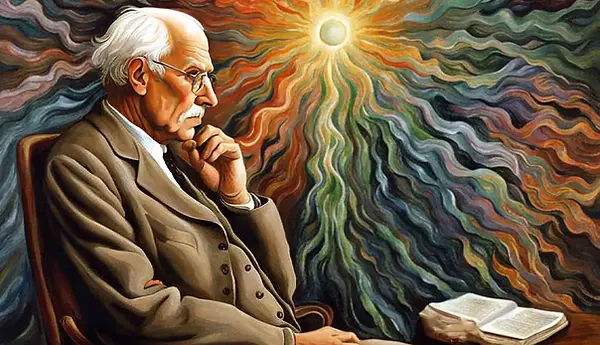
(26 de julio de 1875 – 6 de junio de 1961)
los campos de la psiquiatría, la antropología,
la arqueología, la literatura,
la filosofía, la psicología
y los estudios religiosos
El trabajo de Jung consigo mismo y con sus pacientes lo convenció de que la vida tiene un propósito espiritual más allá de los objetivos materiales. La tarea principal de las personas, creía, es descubrir y cumplir su profundo potencial innato.
Es un viaje para encontrarse a uno mismo y, al mismo tiempo, encontrarse con lo Divino.
Based on his study of Christianity, Hinduism, Buddhism, Gnosticism, Taoism, and other traditions, Jung believed this journey of transformation, which he called individuation, is at the mystical heart of all religions.
Theatre and music production successfully holds space for the creative process while autonomous process presents this characteristic of being something that cannot be fully controlled by conscience. The theatrical process may favor the integration of different aspects of the shadow in the development of the individuation process. Jung presented the concepts of psychological creation and visionary creation as two ways of creating that determine the production of a creative work.
While Jung did not consider music in his writings at any length, for some clinical practitioners it has made sense intuitively to extend his ideas in the context of music therapy practice. A Jungian musical aesthetic offers a theoretical explanation, in the language of analytical psychology, for why music is such a powerful therapeutic agent. It also bestows on music a significance and relevance that extends beyond the individual to the whole of humanity.
To honor Jung as a religious humanist, and to consider Jungian analysis in any creation for this theatre and music ministry, becomes a privilege.

Basándose en su estudio del cristianismo, el hinduismo, el budismo, el gnosticismo, el taoísmo y otras tradiciones, Jung creía que este viaje de transformación, al que llamó individuación, está en el corazón místico de todas las religiones.
La producción teatral y musical sostiene con éxito espacio para el proceso creativo mientras que el proceso autónomo presenta esta característica de ser algo que no puede ser controlado completamente por la consciencia. El proceso teatral puede favorecer la integración de diferentes aspectos de la sombra en el desarrollo del proceso de individuación. Jung presentó los conceptos de creación psicológica y creación visionaria como dos formas de crear que determinan la producción de una obra creativa.
Aunque Jung no consideró la música en sus escritos con mucho detalle, para algunos practicantes clínicos ha tenido sentido de manera intuitiva extender sus ideas en el contexto de la práctica de la musicoterapia. Una estética musical junguiana ofrece una explicación teórica, en el lenguaje de la psicología analítica, de por qué la música es un agente terapéutico tan poderoso. También otorga a la música una significación y relevancia que se extiende más allá del individuo hacia el conjunto de la humanidad.
Honrar a Jung como un humanista religioso, y considerar el análisis junguiano en cualquier creación para este ministeria de teatro y música, se convierte en un privilegio.